How Are Shopping Centers Appraised?
How Are Shopping Centers Appraised?
A shopping center commercial appraisal determines the property's market value by evaluating factors such as rental income, occupancy, tenant mix, lease terms, operating expenses, location, property condition and comparable sales. Because shopping centers are income-producing properties, commercial real estate appraisers often place significant emphasis on the property's current and potential income when determining value.
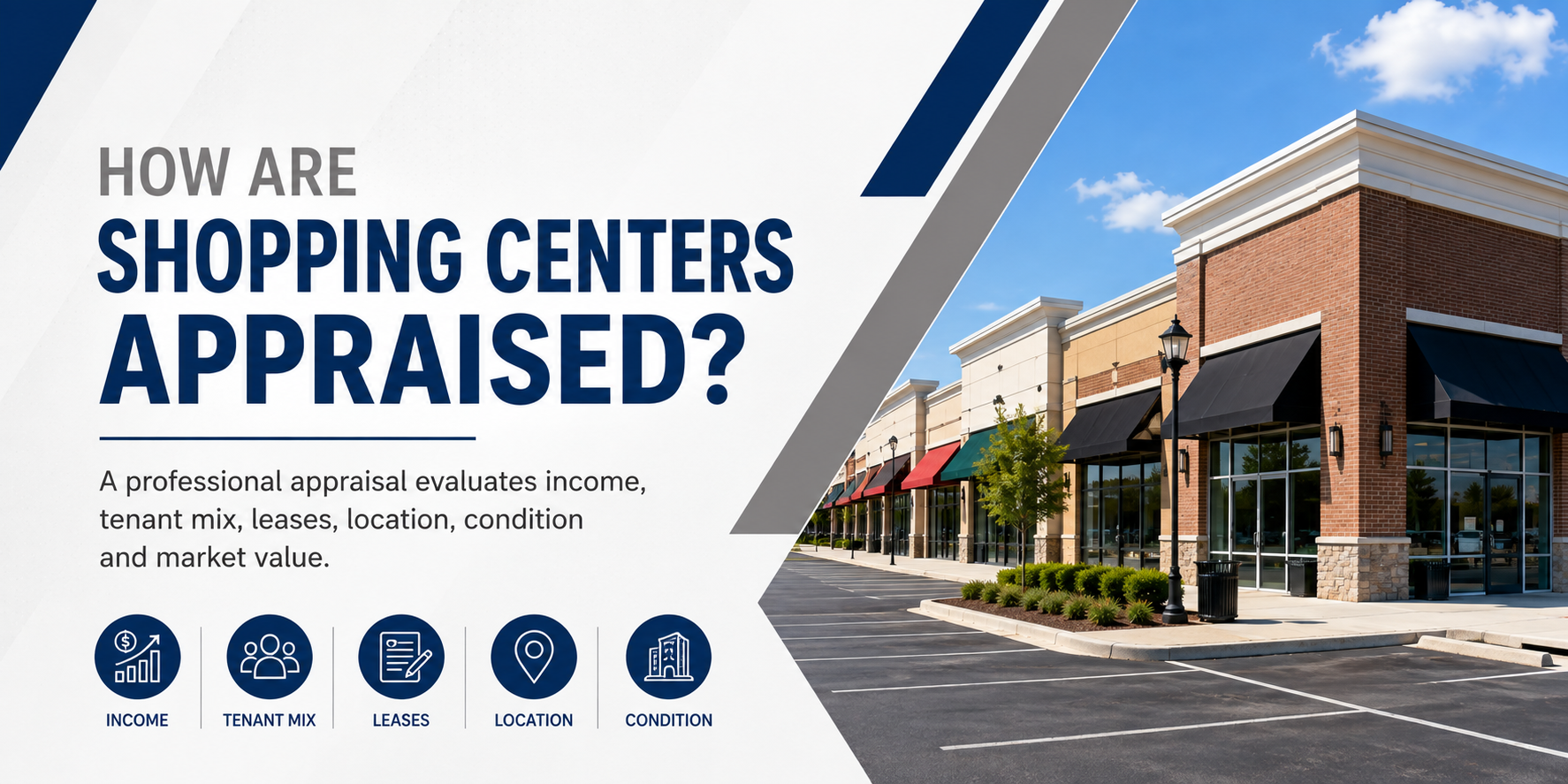
Understanding Shopping Center Appraisals
Shopping centers can be valuable commercial real estate investments, but determining what one is actually worth involves much more than looking at the building's size or comparing it to nearby properties.
A shopping center may contain multiple tenants, different lease structures, varying rental rates and a combination of national, regional and local businesses.
Those factors can all influence the property's income potential—and ultimately its value.
A professional commercial real estate appraisal examines the property, its financial performance and the surrounding real estate market to develop a supported opinion of value.
What Does an Appraiser Look at When Valuing a Shopping Center?
While every property is different, several factors typically play an important role in a shopping center appraisal.
Rental Income
One of the most important considerations is the income the property generates.
A commerical appraiser may analyze:
- Current rental rates
- Contract rent versus market rent
- Lease expiration dates
- Rent increases
- Tenant reimbursements
- Percentage rent, when applicable
- Other sources of property income
The appraiser isn't simply looking at how much rent is being collected today.
The property's ability to continue producing income can also influence its value.
Occupancy and Vacancy
A fully occupied shopping center may present a very different valuation picture from a center with several vacant spaces.
Appraisers consider the property's current occupancy as well as vacancy trends within the surrounding market.
A property's historical occupancy can also provide useful insight into its ability to attract and retain tenants.
Tenant Mix
Who occupies the shopping center matters.
A strong mix of tenants can help attract customers and contribute to the long-term stability of a property.
Appraisers may consider the types of businesses occupying the center, the strength of the tenants, lease terms and whether one or more tenants serve as anchors for the development.
Lease Terms
Two shopping centers producing similar amounts of rental income can still have very different values because of their leases.
An appraiser may examine:
- Remaining lease terms
- Renewal options
- Rental increases
- Expense responsibilities
- Tenant improvement obligations
- Concessions
- Lease structure
Long-term leases with financially stable tenants can affect the risk associated with the property's future income.

Location Still Matters
Location is an important component of virtually every commercial real estate appraisal.
For shopping centers, an appraiser may evaluate factors including:
- Traffic patterns
- Visibility
- Access
- Surrounding development
- Population
- Demographics
- Nearby competition
- Employment
- Residential growth
- Retail demand
A shopping center located in a growing trade area with strong traffic and convenient access may have different investment characteristics from a similar property in an area experiencing declining retail demand.
Property Condition and Improvements
The physical condition of the shopping center is another important consideration.
Appraisers may evaluate the age and condition of the buildings, parking areas, signage, landscaping, roof, HVAC systems and other major property components.
Recent renovations or deferred maintenance may also affect the property's marketability, operating expenses and overall value.
How Do Commercial Appraisers Determine Value?
Commercial real estate appraisers generally consider three traditional approaches to property valuation.
Income Approach
Because shopping centers generate rental income, the income approach can be particularly important.
The appraiser analyzes the property's income and expenses to estimate its net operating income, commonly referred to as NOI.
The property's income stream and the market's perception of risk are then considered when developing an indication of value.
Sales Comparison Approach
The sales comparison approach examines sales of similar shopping centers and retail properties.
The appraiser evaluates differences between the comparable properties and the subject property, including location, size, condition, occupancy, tenant mix, income characteristics and market conditions.
Cost Approach
The cost approach considers the value of the land along with the cost to reproduce or replace the property's improvements, less applicable depreciation.
Depending on the property and the purpose of the appraisal, this approach may receive more or less consideration in the final valuation.
Why Would You Need a Shopping Center Appraisal?
There are many situations in which an owner, investor, lender, attorney or other professional may need an independent valuation of a shopping center.
These may include:
- Buying or selling a property
- Bank financing
- Refinancing
- Estate planning
- Tax matters
- Property tax disputes
- Litigation
- Divorce proceedings
- Partnership disputes
- Insurance considerations
- Investment analysis
- Financial reporting
The purpose of the appraisal can influence the scope of the assignment and the type of value being developed.
What Information May Be Needed for the Appraisal?
Providing accurate property information can help the commercial appraiser understand the financial and operational characteristics of the shopping center.
Depending on the assignment, information requested may include:
- Current rent roll
- Tenant leases
- Historical income and expenses
- Operating statements
- Property tax information
- Site plans
- Surveys
- Building information
- Recent improvements
- Capital expenditures
Additional documentation may be required depending on the property and purpose of the appraisal.
Shopping Center Appraisals Require Commercial Real Estate Expertise
Shopping centers are complex income-producing properties.
Their value can be influenced by everything from individual lease agreements and tenant creditworthiness to vacancy rates, consumer activity and broader commercial real estate market conditions.
That is why shopping center valuation requires more than simply finding a few comparable properties.
An experienced commercial real estate appraiser analyzes the property from both a real estate and income-producing investment perspective.
Need a Shopping Center Appraisal?
Real Estate Matrix provides commercial real estate appraisal and valuation services for a wide range of commercial property types, including retail properties and shopping centers.
Whether the appraisal is needed for financing, investment decisions, estate planning, litigation, taxation or another business purpose, Real Estate Matrix provides professional commercial property valuation services throughout Alabama, Mississippi, Georgia, Tennessee and Florida.
Real Estate Matrix is one of the Southeast’s premier commercial real estate appraisal firms and has participated in the valuation of billions of dollars in real commercial property assets.
We would appreciate the opportunity to add you to our very long list of pleased clients.
You can give us a call or click here to fill out our Free Quote Appraisal Form.
Share
Read More of Our Blog